


Dubai’s real estate market continues to strengthen its position as one of the most attractive investment destinations globally, entering a phase marked by confidence, transparency and long-term stability.
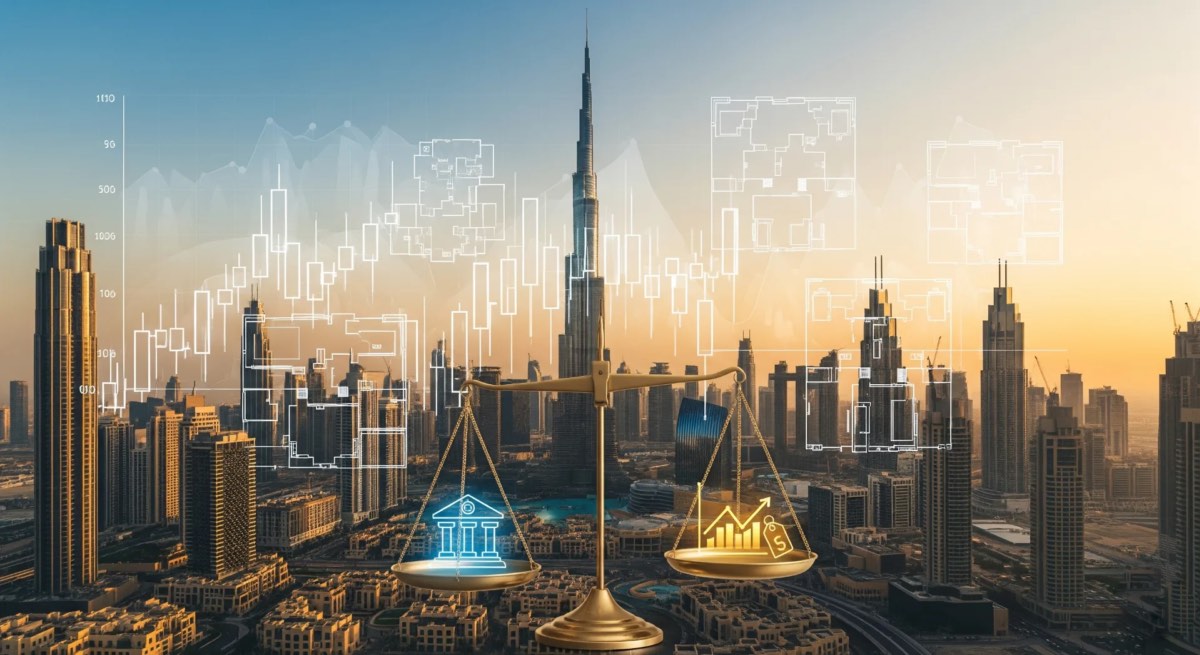
Record-breaking market performance.
In the first half of 2025, Dubai’s property market reached a historic high, with total transaction value hitting approximately $89 billion — a 40% increase compared to the same period last year.
The second quarter became the key growth driver and the most successful quarter in the emirate’s history. Over just three months, 53,118 transactions were completed, totaling $50.1 billion. This figure exceeded the previous record set in Q4 2024 by 25%.
By transaction volume, the leading areas in Q2 were Jumeirah Village Circle, Business Bay, Al Yelayiss 1, Wadi Al Safa and Dubai South. In terms of total transaction value, Me’Aisem Second ranked first, recording 844 deals worth nearly $4.1 billion.
The most expensive properties sold during this period included:
• a villa on Palm Jumeirah sold for $99.3 million
• apartments in Peninsula Dubai Residences, Tower 1 sold for $46.3 million
Dubai real estate: current trends.
According to a joint report by Bayut and dubizzle, the market is characterized by rising prices, strong rental yields and growing investor confidence across both ready and off-plan segments.
Analysts note that the market is entering a more mature phase, where transparency, long-term asset value and data-driven decision-making play a central role.
In the ready property segment, villas in Dubailand recorded the strongest growth in the first half of 2025, with prices increasing by up to 10.4%, driven by demand for spacious yet relatively affordable homes. Positive price dynamics were also observed in Dubai South, DAMAC Hills 2 and Dubai Sports City.
Mid-market buyers continue to focus on JVC, Business Bay and Arabian Ranches 3, while premium demand remains concentrated in Dubai Marina, Downtown Dubai and DAMAC Hills.
The off-plan segment remains highly active, supported by regular project launches and steady demand across all price categories. While price growth is gradually moderating, this slowdown is widely viewed as a healthy signal supporting long-term market stability.
UAE becomes a global leader in skyscrapers.
The United Arab Emirates has officially surpassed the United States in the number of completed buildings taller than 300 meters, according to data from the Council on Tall Buildings and Urban Habitat (CTBUH).
The UAE now has 37 supertall buildings, compared to 31 in the US. China remains the global leader with 122 such structures.
Dubai remains the epicenter of high-rise construction, home to the Burj Khalifa — the world’s tallest building at 828 meters and a symbol of the country’s architectural ambition.
Overall, the UAE ranks third globally by the number of tall buildings:
• 345 buildings exceed 150 meters
• 159 buildings exceed 200 meters
A new growth phase: villas and townhouses.
According to Property Monitor, more than half of all villas and townhouses scheduled for delivery in Dubai by 2027 will be developed by just two major developers.
Damac Properties accounts for approximately 34% of upcoming supply (6,018 units), while Emaar contributes around 20% (2,744 units already completed and 3,468 under construction). Other key developers include Nakheel, Reportage Real Estate and Dubai South Properties.
Analysts point out that townhouses are gradually replacing traditional standalone villas. For example, more than 5,100 of Damac’s current units are townhouses, a strategy increasingly adopted by other developers as well.
This shift reflects changing buyer preferences, particularly among young families and middle-income buyers seeking a balance between price, space and quality of life within well-planned communities.
In 2025, construction also began on several new low-rise communities, including Golf Acres by Emaar, Jumeirah Golf Estates 2 and the eco-focused The Wilds project by Aldar.
Growth in villa and apartment prices.
According to consultancy ValuStrat, villa prices in Dubai have increased by 180% compared to post-pandemic levels, while apartment prices are up 73%. Over the past year alone, villa prices rose by an average of 28.7%.
The strongest villa price growth was recorded in:
• Jumeirah Islands — +41.1%
• Palm Jumeirah — +40.5%
• Emirates Hills — +27.5%
Apartment prices increased by an average of 19.1%, with the highest growth seen in:
• The Greens — +24.4%
• Dubai Silicon Oasis — +23.4%
• Dubailand Residence Complex — +23.3%
The lowest growth rates were recorded in International City (+11.2%) and Business Bay (+15.8%). Experts emphasize that the market is becoming more balanced, with a moderate slowdown in price growth expected in the second half of 2025, while overall demand continues to rise.
Support for first-time home buyers.
In July 2025, Dubai authorities launched the First-Time Home Buyer program aimed at supporting residents and expats purchasing property in the emirate for the first time.
The program allows eligible buyers to purchase property valued up to $1.36 million on preferential terms. It is implemented by the Dubai Land Department (DLD) in cooperation with the Department of Economy and Tourism (DET) and is open to both UAE nationals and foreign residents.
Participants gain access to special offers from 13 leading developers and 5 banks, including flexible payment plans and mortgage solutions. The program can be used once, with a minimum age requirement of 18 and no previously registered property ownership in Dubai.
How to participate:
• review program details via the DLD website or Dubai REST app
• submit documents (Emirates ID or passport, first-time buyer declaration, sale agreement)
• receive confirmation and a unique QR code granting access to offers
• select a property from the approved list
Available options include:
• apartments with 1–4 bedrooms in central locations
• villas and townhouses in Dubailand, Mirdif and JVC
• off-plan projects from leading developers
Key benefits of the program include discounts, installment-based payment of the 4% DLD registration fee over up to 8 months, and customized payment schedules.
Participating developers include Emaar, Nakheel, Meraas, DAMAC, Dubai Properties, Majid Al Futtaim, Danube, Azizi, Binghatti and others. Banking partners include Emirates NBD, Mashreq, Dubai Islamic Bank, Emirates Islamic and Commercial Bank of Dubai.
Experts believe the launch of the program aligns with a favorable phase of market development and will help increase end-user participation, stabilize the rental segment and further reinforce the long-term resilience of Dubai’s real estate market.
 Call us
 Privacy Policy