


How a crypto exchange works: orders, fees, custody and UAE rules
What happens when you press "buy", why the same USD 10,000 purchase can cost $10 or $300, who holds your coins and how crypto platforms are regulated in the UAE.

A crypto exchange looks like a simple app, but behind the "buy" button there is an order book, a fee schedule and a company holding your assets. Understanding these three parts tells you most of what you need to know about cost and risk.
- Prices are set by an order book: buyers' bids meet sellers' asks; the gap between them is the spread.
- The same USD 10,000 purchase can cost from about $10 with a limit order to $300 or more with a card.
- Coins left on an exchange are a claim on that company; self-custody removes that risk but adds your own.
- In the UAE, platforms must be licensed (VARA in Dubai, SCA, ADGM or DIFC); transfers and conversions of virtual assets are exempt from VAT.
The order book: where the price comes from
An exchange matches buyers and sellers. Buyers post bids (the price they are willing to pay), sellers post asks. The highest bid and the lowest ask form the market price; the difference between them is the spread. The more liquid the market, the narrower the spread.
- Market order — buys immediately at the best available asks; fast, but you pay the spread and possible slippage on large orders.
- Limit order — you set the price; it waits in the book until someone matches it, and often pays a lower "maker" fee.
- Stop order — becomes a market or limit order when the price reaches a trigger; used to limit losses.
What a purchase really costs
Fees are charged as a percentage of the trade, and "zero-fee" buttons usually hide the cost in a wider spread. Typical costs for a USD 10,000 purchase of a major coin:
| How you buy | Typical cost | On USD 10,000 |
|---|---|---|
| Limit order on the exchange (maker fee) | ≈0.10% | $10 |
| Market order (taker fee + spread) | ≈0.10% + ≈0.05% | $15 |
| "Instant buy" / convert button | ≈1% built into the price | $100 |
| Bank card purchase | ≈2–4% | $300 |
Custody: who actually holds your coins
When coins sit on an exchange, you own a claim on the exchange, not the coins on the blockchain. If the company fails or freezes withdrawals — as FTX did in 2022 — clients become creditors. Self-custody in your own wallet removes that risk, but losing the seed phrase means losing the assets with no one to call. Many investors keep trading balances on a regulated exchange and long-term holdings in a hardware wallet.
Rules in the UAE
- In Dubai (outside DIFC) virtual asset service providers must be licensed by VARA; elsewhere on the mainland by the SCA; in the financial free zones by ADGM's FSRA or the DFSA. Check the public register, not the app's marketing.
- A licence does not mean a guarantee: it means rules on custody, client money, marketing and anti-money-laundering checks.
- Since 15 November 2024 the transfer and conversion of virtual assets is exempt from VAT, retroactively to 1 January 2018.
- The UAE has no personal income tax, but your country of tax residence may tax crypto gains.
Checklist before you deposit money
- Find the company in the regulator's register under its exact legal name.
- Read the fee page: maker, taker, spread, deposit and withdrawal fees.
- Check how client assets are held (segregated, proof of reserves, insurance).
- Turn on two-factor authentication and a withdrawal address whitelist.
- Start with a small test withdrawal to your own wallet.
Main risks
- Volatility: falls of 50–80% have happened several times in bitcoin's history.
- Platform risk: insolvency, hacks or frozen withdrawals.
- Scams: fake "managers", guaranteed returns and copy-trading schemes; no licensed platform will ask for your seed phrase.
- Liquidity outside major coins can disappear quickly.
- Dubai Virtual Assets Regulatory Authority (VARA) — licensed VASP register — www.vara.ae
- Securities and Commodities Authority (SCA) — www.sca.gov.ae
- ADGM Financial Services Regulatory Authority — virtual assets framework — www.adgm.com
- UAE Cabinet Decision No. 100 of 2024 (VAT exemption for virtual asset transfers and conversions, effective 15 Nov 2024, retroactive to 1 Jan 2018) — Federal Tax Authority — tax.gov.ae
Data checked: November 2026.
Information only, not individual investment, tax or legal advice. Figures are examples based on the stated assumptions; check current rules with the official sources.
Dubai apartment · rent + price
How does this compare with a Dubai apartment?
Same money, a different job: an apartment pays rent every month and can be bought with a mortgage, but takes weeks to sell. See the numbers side by side.
Investment guides
Keep reading
 Stocks, bonds & ETFs
ETFs explained for international investors: costs, domicile and taxes
What an ETF is, which costs matter, and why an investor living in the UAE may keep about USD 10,000 more over 20 years by choosing the right fund domicile.
Updated 11.11.2026Read → Gold & precious metals
How to invest in gold: bars, coins or ETFs — costs compared
Why investors hold gold, the real cost of bars, coins and gold ETFs, a five-year calculation on USD 20,000, and UAE rules on VAT and customs.
Updated 11.11.2026Read → Dubai Real Estate
Dubai rents by area in 2026: apartments and townhouses
Average annual rents for studios to 3-bedroom apartments in seven Dubai areas, townhouse rents in three communities, service charges and what is left after them.
Updated 11.11.2026Read →Market pulse
News on this topic
Bitcoin near $74,000: 41% below its peak as ETFs lose $1.2bn in three weeks
Bitcoin traded at about $73,900 on 11 November — 41% below its October 2025 record and 28% lower than a year ago. US spot ETFs saw $1.18bn of…
Read →11,898−40%deals in October vs 2025Dubai propertyNewOctober 2026 vs October 2025: 40% fewer deals, prices down 3%. Dubai market breakdown
October 2026 vs October 2025 on DLD data: 11,898 deals vs 19,850, AED 34.7bn vs AED 59.2bn, median AED 1,636 per sq ft. Why sales fell much faster…
Read →AED 34.7bn+17%October sales value vs SeptemberDubai propertyNewOctober vs September 2026: money returned to Dubai property faster than deals
October vs September 2026: deals +4.9% (11,898), value +16.9% (AED 34.7bn), villa sales +59%, median price per sq ft −1.2%. Who came back to the…
Read →Dubai · 2026
Dubai projects for these scenarios
Live prices from our catalogue. Open a project for floor plans, the payment plan and a yield estimate for each unit.

Sakura Gardens
HRE DEVELOPMENT
fromAED 893,000
Alef Noon Residence
Al Bait Al Duwaliy
fromAED 620,000
08 Life Residences
Deniz Real Estate Development
fromAED 549,000
Ramada Residences
Lincoln Star Real Estate Development
fromAED 527,000
Red Square
Tiger Group
fromAED 520,000
11 Park Hills
TownX Development
fromAED 860,000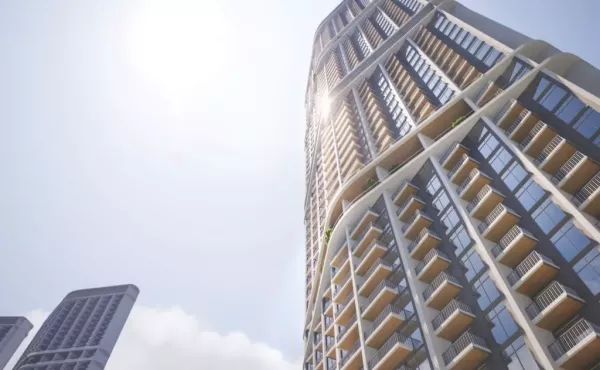
340 Riverside Crescent
Sobha Realty
fromAED 1,100,000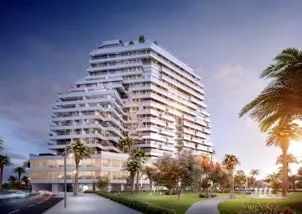
Aliyah Residences
Azizi Developments
fromAED 1,138,000Sakura Gardens
HRE DEVELOPMENT
fromAED 893,000Alef Noon Residence
Al Bait Al Duwaliy
fromAED 620,000
Villa del Gavi
Mr. Eight Development
fromAED 3,961,000
Haven
Aldar Properties
fromAED 3,300,000
Rise
Athlon by Aldar Properties
fromAED 1,423,000
Hartland 2 Estates
Sobha Realty
fromAED 60,641,00008 Life Residences
Deniz Real Estate Development
fromAED 549,000Ramada Residences
Lincoln Star Real Estate Development
fromAED 527,000Villa del Gavi
Mr. Eight Development
fromAED 3,961,000Haven
Aldar Properties
fromAED 3,300,000
La Tilia
Dubai Properties
fromAED 2,730,000
Beach Walk Residence
IMTIAZ
fromAED 2,376,000
Rayhan 1 at Waada
BT Properties
fromAED 2,998,000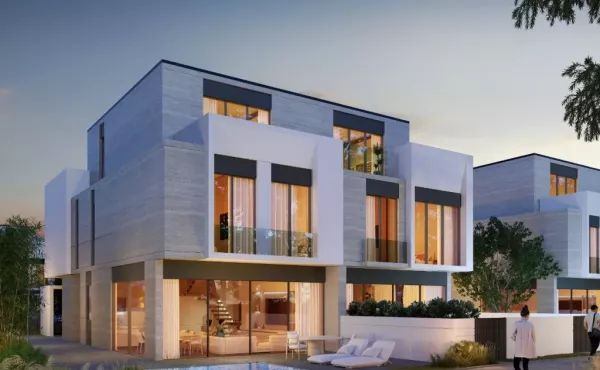
D Villas
DarGlobal
fromAED 7,212,000
Mudon Al Ranim
Dubai Properties
fromAED 3,700,000
Reportage Hills
Reportage Properties
fromAED 2,830,000Personal calculation
Turn these numbers into a decision
Tell us your budget and your goal. We will compare specific Dubai projects with the alternatives — real payment plans, real rents and an honest yield estimate. Free and without obligation.
Information only, not individual investment, tax or legal advice. Prices, rates and rules change — check the date and sources in each guide.

 Call us
 Privacy Policy
Estate's
© 2026 empirecityuae.com all rights reserved.
EMPIRE CITY REAL ESTATE L.L.C License No. 1134004.
We are in social networks: 

 *


Off Plan
Areas
Villas & Townhouses
- Villas and Townhouses in Dubai
- Villas and Townhouses in Abu Dhabi
- Villas and Townhouses in Sharjah
- Villas & Townhouses in Ajman
- Villas and Townhouses in Ras El Khaimah
- Villas and townhouses in Oman
- Dubai Hills Estate
- DAMAC Lagoons
- Arabian Ranches 3
- Tilal Al Ghaf
- DAMAC Hills 2
- MBR City
- Dubai South
- The Valley
- Town Square
- Yas Island
- Saadiyat Island